
How Context Influences the Interpretation of Tarot Cards
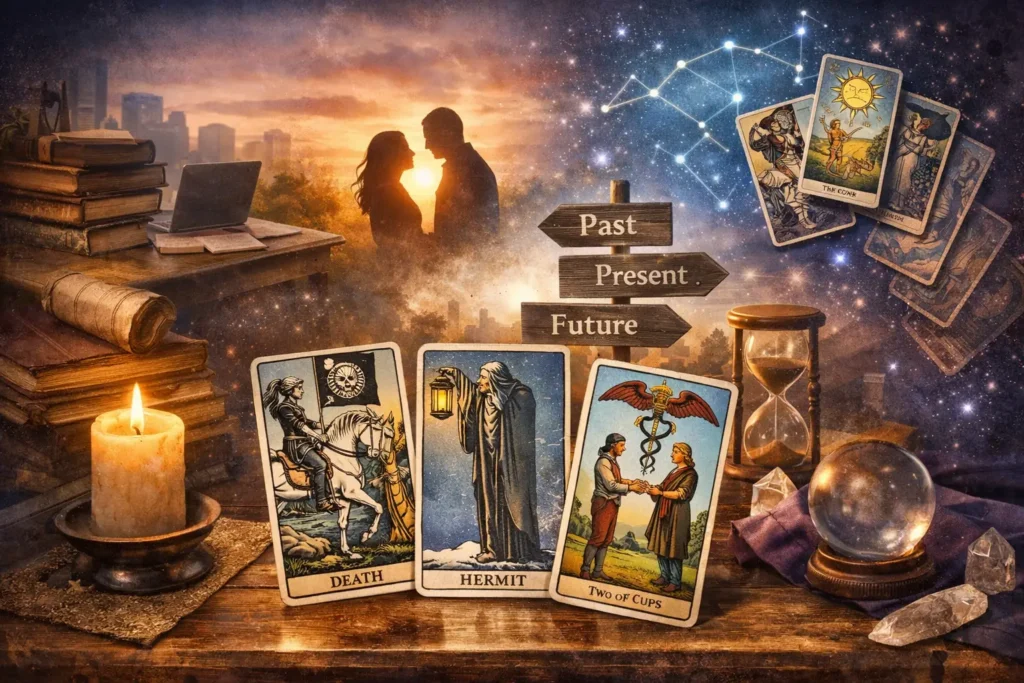
Context influences the interpretation of tarot cards because a card is read within a specific reading, not as a standalone symbol. Its meaning becomes more precise through the topic of the reading, the situation surrounding it, the card’s position, and the other cards nearby. The card itself does not become something else, but context determines which layer of meaning is active in that reading.
- The same symbol can apply to different parts of a situation.
- The reading topic frames what the card is describing.
- The situation changes which aspect of the card comes forward.
- Card position changes the card’s role.
- Surrounding cards refine tone, direction, and emphasis.
What Context Means in Tarot Interpretation
In tarot interpretation, context is the frame that shows how a card’s symbolism applies in a particular reading. That frame usually includes the topic being explored, the current circumstances, the card’s position in the spread, and the way other cards shape the overall message. Because a card often carries a broad theme rather than one fixed statement, context helps show which expression of that theme fits the reading in front of you.
How the Topic of the Reading Changes Interpretation
The topic of the reading determines what part of a card’s meaning is being applied. The same card may describe a bond between people in one reading, a role or task in another, and an internal shift in a third. The card stays the same, but the topic changes what it is pointing to.
Example: One Card in Different Reading Contexts
| Reading Context | Possible Emphasis |
|---|---|
| Relationships | The card may point to the dynamic between two people: distance, pursuit, imbalance, or a change in how connection is being handled. |
| Work | The same card may describe function and direction: workload, stalled progress, shifting responsibility, or the need to move differently within a practical system. |
| Personal change | It may point inward instead: identity shift, shedding an older self-concept, or adapting to a change that is altering the person from within. |
The underlying theme can remain similar across all three. What changes is the domain of life the card is describing.
How the Situation Changes What a Card Is Pointing To
Context also includes the actual state of the situation. A card may be read differently depending on whether the issue is just beginning, already unfolding, or nearing resolution. Current circumstances matter because timing, pressure, uncertainty, momentum, or outside factors can all change what part of the card stands out.
Example: Death Before, During, and After Change
Before change: Death may point to what must be released before movement can begin. The emphasis is on ending, clearing, or no longer holding onto a form that has already run its course.
During change: the same card may point to transition in motion. Here the emphasis shifts from ending to passage, with the reading focused on crossing from one state into another.
After change: once the shift has already happened, Death may describe the reality of living beyond the old phase. The emphasis is no longer on letting go or crossing over, but on what the new condition now makes possible or necessary.
The card still carries the same central theme of ending and transformation. The stage of the situation changes what part of that theme is active.
How Card Position in the Spread Changes Meaning
Position shows what job the card is doing in the reading. The same card can appear as background, challenge, guidance, or likely direction, and that role changes how the card should be read.
Example: One Card in Different Positions
- Past influence: the card may describe what shaped the current situation.
- Obstacle: the same card may show what is difficult to move through, understand, or release.
- Guidance: it may point to the response, adjustment, or perspective that would be most helpful.
The theme stays connected, but the position changes its function in the reading.
How Surrounding Cards Refine Meaning
Tarot cards are often read in combination rather than in isolation. Surrounding cards can reinforce a theme, soften it, complicate it, or make it more specific. They do not replace the card’s meaning, but they help define tone and direction.
Example: One Card in Different Combinations
Card example: The Hermit. Beside steady or supportive cards, The Hermit may suggest deliberate reflection, useful solitude, or a pause that creates clarity. Beside more difficult or pressured cards, the same card may point to isolation, disconnection, or retreat under strain. Beside strongly transitional cards, it may suggest an inward phase that prepares for later movement.
The central idea of introspection remains intact, but the surrounding cards clarify how that introspection should be understood.
How Interpretive Approach Affects Emphasis
Context can also include the interpretive approach used in the reading. Some readings give more weight to imagery and symbolism. Others place more emphasis on the narrative created by the spread and the interaction between cards. This can shift emphasis without making meaning arbitrary. One reading may focus more on image and archetype, while another focuses more on sequence and role. Both still stay within the card’s boundaries.
Why Context Does Not Mean a Card Can Mean Anything
Context does not make tarot interpretation unlimited. A grounded reading still stays connected to the card’s imagery, established themes, and role in the spread. Context helps narrow meaning so that it fits the reading more precisely. That is why the same tarot card can sound different from one reading to another without becoming random. Context does not replace symbolism. It determines which layer of meaning matters in this reading.
Conclusion
Context does not replace a tarot card’s symbolism. It determines which layer of that symbolism is relevant in a particular reading.
Frequently Asked Questions
What does context mean in tarot interpretation?
Context means the factors that shape how a card’s symbolism applies in a specific reading. That usually includes the reading topic, the situation, the card’s position, and the surrounding cards.
Does context mean a tarot card can mean anything?
No. Context narrows meaning rather than removing all limits. A grounded interpretation still stays connected to the card’s imagery, themes, and role in the reading.