
Is Anxiety a Spiritual Attack?
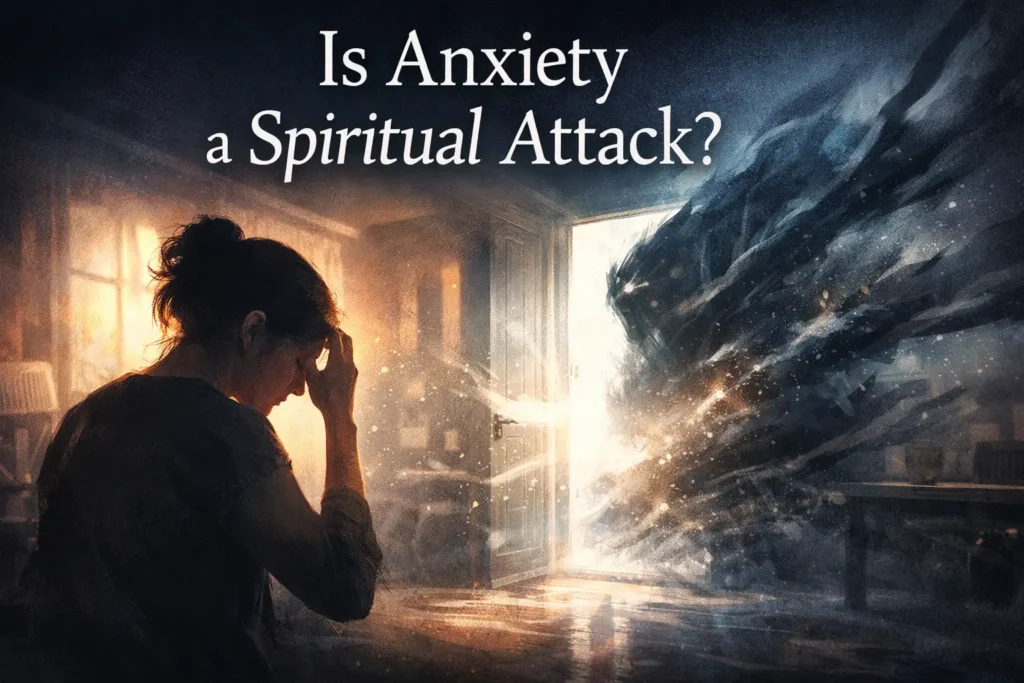
Direct answer: Anxiety can feel like a “spiritual attack” when fear arrives as something invasive—like it’s happening to you rather than from you. The feeling is real. “Spiritual attack” is one way some people explain that intensity, but the label can either steady you or raise the stakes depending on how it shapes attention and agency.
- The sensation is real; the explanation is a meaning-frame.
- “Attack” language can add structure—or amplify alarm.
- Externalizing fear can quietly shrink your sense of agency.
- You can hold uncertainty without escalating fear.
What people usually mean by “spiritual attack”
In everyday spiritual language, “spiritual attack” often names an experience that feels intrusive rather than self-generated. Many people use the phrase to describe how anxiety shows up—not to prove what caused it.
- “This isn’t mine.” Fear feels foreign or planted.
- Invasion. A sense of being mentally “pushed” or crowded.
- Sudden wave. Anxiety rises fast, without an obvious lead-up.
- Pressure or threat. A feeling of looming danger or being targeted.
These descriptions focus on texture: intrusion, pressure, threat, suddenness. That lived texture is what people are trying to name.
Why anxiety can feel external—and why “attack” can fit the feeling
Anxiety can arrive with a strong sense of threat before you have words for it. When that feeling is intense, people often look for language that matches the impact. For some, “spiritual attack” is the closest phrase for “this feels like it broke in.”
Intensity can feel like intrusion
When fear surges, it can take over attention and narrow your world fast. If it arrives quickly—or feels disproportionate to the moment—it can resemble being “hit” by something.
Why it can feel like “not me”
Anxiety can change your inner tone so abruptly that it feels foreign: thoughts may sound louder, harsher, or unlike your usual voice, even if you can’t point to a clear trigger.
Common ways people describe the experience
Without making any claim about metaphysical cause, people who use “spiritual attack” language often describe anxiety in phrases like:
- A sudden drop in safety. The world feels less safe in an instant.
- A sense of being cornered. As if there’s no “room” inside your own mind.
- Thoughts that feel loud or off-tone. Like the fear has its own voice.
- A tight, pressurized feeling. Often in the chest or behind the eyes, paired with urgency.
- A sense that the room changed. The atmosphere feels different, sharper, heavier, or “charged.”
- A targeted quality. Not just fear, but fear that feels aimed.
- A “break-in” feeling. Like something arrived uninvited and took the wheel.
Why an “attack” story can feel clarifying
Calling it an “attack” can create instant structure: there’s a name for the intrusion and a reason it feels intense. That clarity can be soothing for some people—even if it also makes the situation feel more serious.
Sensation vs. explanation: the distinction that lowers the temperature
This topic becomes less frightening when you separate two layers:
- The sensation is real. You are genuinely experiencing anxiety.
- The explanation is interpretive. “Spiritual attack” is one possible meaning-frame for that experience.
Keeping those layers distinct lets you respect your spiritual language without locking yourself into a single, fear-heavy conclusion.
These alternatives don’t argue with belief; they reduce escalation in the story.
The risk of interpreting anxiety as an attacker
Even if the label feels meaningful, it can carry costs when it turns anxiety into an outside force that controls the room.
- It can increase fear. “Attack” language raises the stakes instantly.
- It can reduce agency. If the cause is outside you, control can feel out of reach.
- It can create constant scanning. You may start looking for “signs” everywhere.
- It can narrow your options. You may feel you must solve the metaphysics first.
- It can isolate you. Shame or uncertainty can keep you disconnected.
When the explanation intensifies fear or pulls you away from people, that’s often a sign the frame is costing more than it’s giving. In those moments, reaching for support can matter more than reaching for certainty.
How to keep your agency without picking a side
You don’t have to settle the metaphysical question to regain steadiness. Anxiety is a real internal experience, and agency often grows when the story stays proportional to what you actually know and feel.
The aim isn’t to win an argument about cause. It’s to keep your footing while the experience is happening.
Example: “question → interpretation approach → safe conclusion”
A sudden wave of fear at home
Question: “Why did anxiety hit me out of nowhere—does that mean it’s a spiritual attack?”
Interpretation approach: Treat “spiritual attack” as a name for how invasive it feels, not a settled verdict about the cause. Keep two layers in view: the felt experience (sudden dread) and the story (external attacker).
Safe conclusion: “This feels like an intrusion. I can acknowledge the intensity without turning it into certainty about what’s causing it.”
When not to use the “spiritual attack” lens
Some situations call for extra caution with external-attack interpretations, because they can intensify fear or pull you into isolation:
- When anxiety becomes constant or keeps escalating.
- When it disrupts sleep, work, or basic daily functioning.
- When the “attack” label increases fear, preoccupation, or compulsive scanning.
- When the interpretation isolates you from other people or makes support feel off-limits.
In these cases, prioritizing support over explanation can be the steadier move. You can keep your spiritual language and still reach out to someone you trust or someone trained to help.
What this article is (and isn’t)
What this is: a belief-safe explanation of why anxiety can be experienced as “external,” and how to separate sensation from interpretation in a way that reduces fear and restores agency.
What this isn’t: proof that spiritual attacks exist, a dismissal of spiritual belief, religious doctrine, or a treatment plan for anxiety.
Frequently Asked Questions
Is anxiety a sign of a spiritual attack?
It can feel that way when anxiety shows up as intrusive, sudden, and threatening. The sensation is real, and “spiritual attack” is one meaning-frame some people use to match the intensity of the experience—without that label automatically settling the cause.
Why does anxiety feel like it’s “not mine”?
For many people, strong anxiety changes inner tone so quickly that it feels foreign. “Not mine” often names the intrusive quality of fear rather than a verified source.
Can calling it a “spiritual attack” make anxiety worse?
Sometimes. “Attack” language can raise the stakes and increase scanning for danger, which can make the experience feel even more threatening. Some people find it less frightening to describe the sensation first and hold the interpretation more lightly.
How can I keep my beliefs without feeling powerless?
Some people keep agency by treating “spiritual attack” as a meaning-frame rather than a verdict. The goal isn’t to abandon belief—it’s to choose language and interpretation that don’t expand fear or shrink your sense of control.
When should I reach for support even if I think it’s spiritual?
If anxiety is escalating, disrupting daily functioning, or isolating you, support can matter more than certainty about the cause. Many people keep their spiritual interpretation while still talking to someone they trust or someone trained to help.